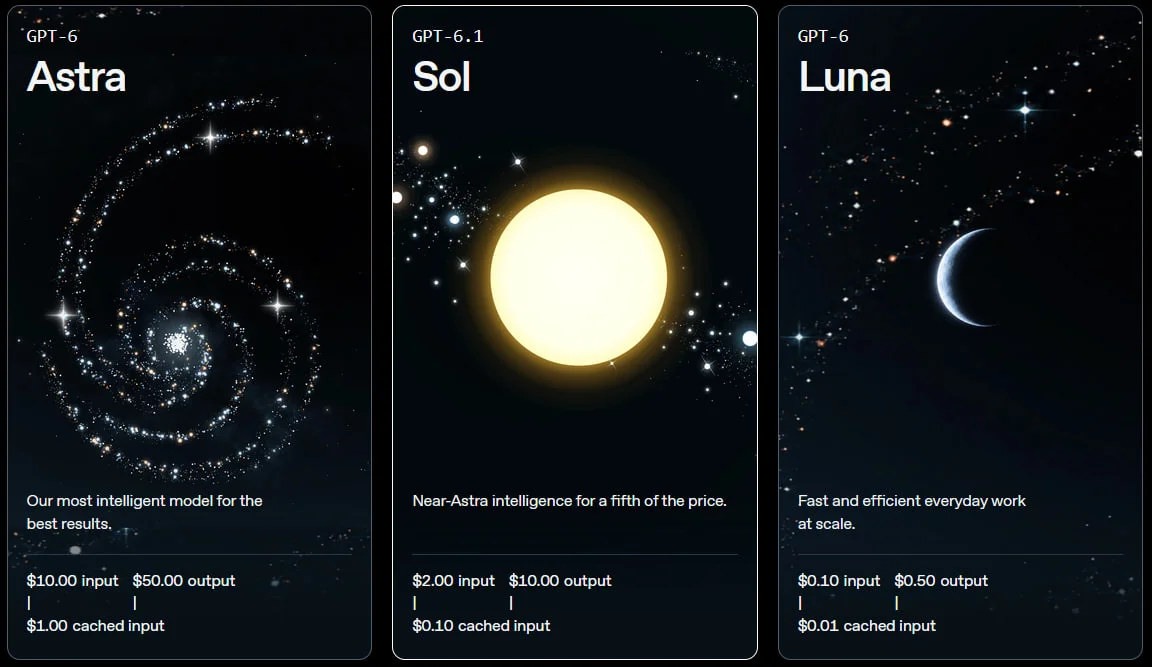
OpenAI introduced GPT-6.1 Sol — an updated version of Sol that has moved closer to the flagship GPT-6 Astra in capabilities while remaining significantly cheaper.
I've been using the new model for about a week, and I'm much more interested in sharing 3 things I've noticed in practice:
- how quickly GPT-6.1 appeared
- Sol's new role in my development workflow
- a comparison between GPT-6.1 Sol and GPT-6 Astra
GPT-6.1 Sol arrived just one week after GPT-6
GPT-6 Sol and Luna were introduced on September 22, and just one week later, on September 29, OpenAI released GPT-6.1 Sol.
For a new generation of models, one week between the initial release and such a noticeable update feels like a very short amount of time.
Of course, OpenAI is not talking about any kind of “recursive self-learning” with GPT-6.1. But the pace of development naturally leads to that thought: AI is being used more and more for writing code, research, testing, and the development of AI systems themselves, while the cycle between a new model appearing and its next improvement keeps getting shorter.
The speed at which new models appear is forcing us to update our own picture of the world more often 😂

A week of use: Sol as the orchestrator, Luna as subagents
The biggest change in my workflow isn't even related to code generation quality. I started using GPT-6.1 Sol as the orchestrator of a complex task: it analyzes the project, determines the sequence of work, and keeps track of the overall result.
At the same time, small independent parts of the task can be delegated to subagents running on GPT-6 Luna. For example, one agent can investigate a specific part of the codebase, another can check the documentation or find the right place for a change, and Sol then collects the results and continues the main task.
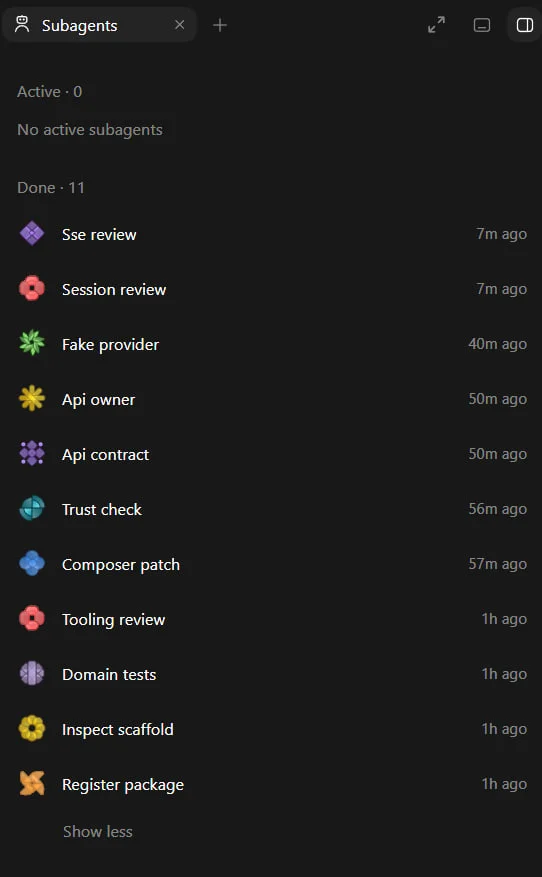
To me, this feels much more logical than running the most powerful model for every small operation. Complex planning and decision-making stay with Sol, while simpler local tasks are handled by cheaper agents.
In my workflow, Sol is starting to feel less like a model that simply writes code and more like a developer who distributes work between other agents.
Why GPT-6.1 Sol is more interesting to me than Astra
GPT-6 Astra is still the stronger model. But how much useful work can I get done for the same money or within the available limit?
Yes, GPT-6.1 Sol can make mistakes, won't always produce the perfect result on the first attempt, and may require another iteration. But if you look at the total amount of work it can get done, the trade-off becomes much more interesting.
This is especially noticeable on plans where you constantly have to keep token limits in mind.
Comments (0)
No comments yet. Be the first!